Automotive Sensors Explained: A Practical Guide for B2B Buyers
03 September 2026 | By Rui Xinsheng Auto Parts | Volume 0
Automotive Sensors Explained: What B2B Buyers Need to Know in 2026
Modern cars are becoming smarter, safer and more connected. Even an ordinary family vehicle now uses dozens of sensors to monitor the engine, wheels, steering, brakes, exhaust system and passenger cabin.
Drivers may not notice these small components until a warning light appears. For automotive parts importers, distributors, repair chains and OEM buyers, however, sensors have become an increasingly important product category.
Demand is being supported by several practical changes. Vehicles are staying on the road longer, advanced driver assistance systems are becoming more common, and safety regulations in the United States and Europe are increasing the number of electronic systems installed in new vehicles.
In the United States, automatic emergency braking is moving toward wider mandatory adoption. These systems use forward-facing sensors to identify vehicles or pedestrians and apply the brakes when necessary. In Europe, new vehicles are already required to include safety technologies such as intelligent speed assistance, reversing detection and driver-attention warnings.
For B2B buyers, the opportunity is clear—but so is the challenge. More sensors do not automatically mean easier sales. Vehicle compatibility, product quality, calibration requirements and technical support are becoming more important than simply offering a low price.
What Is an Automotive Sensor?
An automotive sensor is a small electronic component that measures a physical condition inside or around a vehicle. It sends this information to an electronic control unit, often called an ECU.
The ECU uses the data to make decisions. For example:
- A temperature sensor tells the engine control unit whether the engine is cold or hot.
- A wheel speed sensor helps the ABS determine whether a wheel is about to lock.
- A throttle position sensor reports how far the throttle is open.
- A steering angle sensor measures the direction and speed of steering-wheel movement.
- A tire pressure monitoring sensor warns the driver when tire pressure is too low.
A simple way to understand the process is to think of sensors as the vehicle’s eyes, ears and sense of touch. They collect information, while the control units decide how the vehicle should respond.
Why Are Car Sensors Receiving More Attention?
Three major trends are driving interest in automotive sensors.
1. More Safety Systems Are Becoming Standard
Features that were once available mainly on premium cars are now appearing in mainstream vehicles. Automatic emergency braking, lane-keeping assistance, blind-spot monitoring and parking assistance all depend on sensors.
The European Union requires a range of advanced safety features on new vehicles, including intelligent speed assistance and reversing detection. The U.S. National Highway Traffic Safety Administration has also established a standard for automatic emergency braking on new light vehicles.
This creates opportunities not only for original-equipment suppliers but also for the automotive aftermarket. As sensor-equipped vehicles become older, more replacement parts, diagnostic services and calibration work will be required.
2. Vehicles Use More Electronic Control
Sensors are no longer limited to basic engine management. They are used throughout the vehicle, including:
- Engine and transmission systems
- Braking and steering systems
- Exhaust and emission-control systems
- Air-conditioning systems
- Tire pressure monitoring systems
- Electric vehicle battery systems
- Driver assistance and parking systems
Electric vehicles still need many familiar sensors, while also requiring products that monitor battery temperature, current, voltage and thermal-management systems. This means electrification changes the sensor mix rather than removing the need for sensors.
3. Buyers Need Better Compatibility Data
Two automotive sensors may look almost identical but work differently. Their connectors, electrical signals, calibration values or software requirements may not match.
This is one of the biggest sourcing problems in the automotive sensor market. A part may physically fit the vehicle but still produce an error code, inaccurate data or unstable performance.
Professional buyers are therefore paying more attention to OE numbers, vehicle applications, production years, engine codes, transmission types and connector details.
Which Automotive Sensors Have Strong Aftermarket Potential?
Demand varies by country, vehicle population and repair habits. However, several categories are especially relevant to distributors and repair networks.
Wheel Speed Sensors
A car wheel speed sensor measures how fast each wheel is rotating. The information is used by the anti-lock braking system, traction control and electronic stability control.
A faulty sensor may cause the ABS or traction-control warning light to remain on. Because the sensor is located near the wheel, it may be exposed to water, dirt, salt, heat and vibration.
For wholesalers, accurate left/right and front/rear application data is essential. Buyers should also check cable length, connector shape and mounting position.
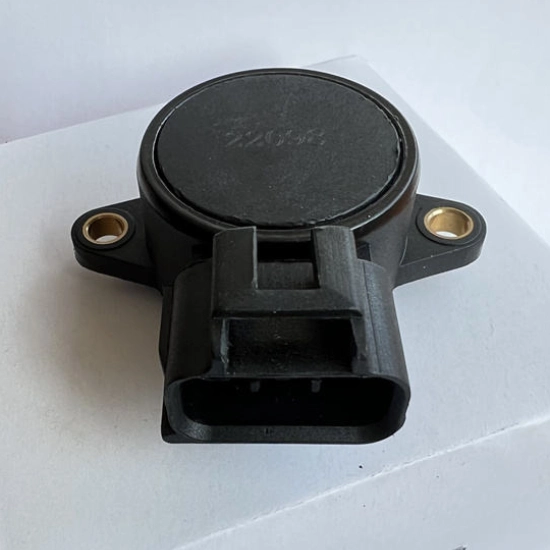
Throttle Position Sensors
A car throttle position sensor monitors the position of the throttle valve. If it fails, the driver may experience poor acceleration, unstable idling, hesitation or increased fuel consumption.
Some throttle sensors are sold separately, while others are integrated into a complete electronic throttle body. Suppliers should clearly identify which version they offer.
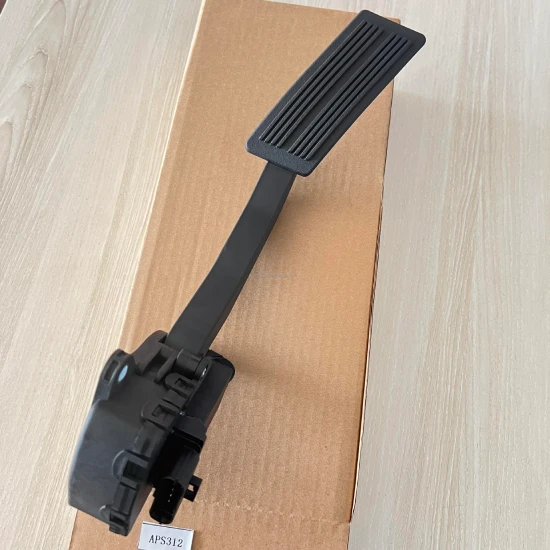
Accelerator Pedal Position Sensors
The accelerator pedal sensor converts pedal movement into an electronic signal. In a drive-by-wire system, there is usually no traditional cable directly connecting the pedal to the throttle.
A defective sensor may cause delayed acceleration, reduced-power mode or inconsistent throttle response. For B2B buyers, matching the sensor to the correct pedal assembly and vehicle platform is important.
Automotive Temperature Sensors
Vehicles use temperature sensors in many locations, including the engine coolant system, intake air system, exhaust system, air-conditioning system and electric vehicle battery pack.
The term “automotive temperature sensor” is therefore too broad for accurate sourcing. A reliable inquiry should identify the sensor location, OE number and vehicle application.
Tire Pressure Monitoring Sensors
TPMS sensors remain a practical aftermarket category because their internal batteries eventually expire and the complete sensor normally needs replacement.
Universal programmable sensors can help distributors reduce the number of individual SKUs they stock. However, buyers must confirm vehicle coverage, operating frequency, programming-tool compatibility and relearn procedures.
Why Can a Cheap Sensor Become an Expensive Problem?
The purchase price represents only one part of the real cost.
An inaccurate sensor may cause repeated warning lights, unnecessary component replacement or incorrect ECU decisions. The workshop then spends more time diagnosing the vehicle, the distributor handles another warranty claim, and the end customer loses confidence.
For a repair chain, a high return rate can erase the savings gained from buying a cheaper product. For an importer or private-label brand, repeated failures may damage the reputation of an entire product range.
A good automotive sensor supplier should be able to provide more than a quotation. Useful supplier information includes:
- OE and aftermarket cross-reference numbers
- Detailed vehicle fitment data
- Electrical and dimensional specifications
- Product and connector photographs
- Testing procedures
- Batch traceability
- Warranty terms
- Packaging and private-label options
- Technical support for application questions
Do All Replacement Sensors Need Calibration?
No. Calibration requirements depend on the sensor and vehicle system.
Many engine or temperature sensors can operate after correct installation. Other components may require a relearn procedure, fault-code clearing or software setup.
ADAS cameras, radar units and some steering-related sensors may require static or dynamic calibration. A replacement component could be mechanically installed correctly but still fail to perform as intended if calibration is skipped.
B2B sellers should avoid promising “plug and play” unless this has been confirmed for the specific application. Clear installation notes can reduce incorrect returns and help workshops quote jobs more accurately.
How Should B2B Buyers Choose an Automotive Sensor Supplier?
Start with the application data rather than the price list.
Ask the potential supplier to provide sample fitment records. Check whether the records include make, model, production year, engine, transmission, OE number and installation position. If the same sensor has several connector or software versions, those differences should be clearly explained.
Next, review the supplier’s quality-control process. Depending on the product, testing may cover output accuracy, temperature resistance, vibration resistance, sealing, electrical life and connector durability.
Importers and brand distributors should also consider communication speed. Automotive catalog data is never perfect, and application questions will occur. A supplier that can investigate a VIN, OE number or technical photograph quickly may deliver more value than one offering a slightly lower unit price.
Finally, test samples on real vehicles whenever possible. Packaging may look professional, but vehicle testing provides much stronger evidence of fit and performance.
What Information Should Be Included in an RFQ?
A detailed request for quotation helps buyers receive faster and more accurate offers.
Include:
- OE part number
- Vehicle make and model
- Model year or production range
- Engine size or engine code
- Transmission type, where relevant
- Left-hand-drive or right-hand-drive version
- Required quantity
- Target market
- Packaging requirements
- Certification or testing requirements
- Clear photographs of the original part and connector
If the OE number is unavailable, provide the VIN and photographs. Avoid sending only a general request such as “price for car speed sensor,” because many unrelated products can match that description.
What Is the Biggest Opportunity for Automotive Sensor Distributors?
The strongest opportunity may not be one individual sensor. It is the ability to make sensor purchasing easier.
Repair shops want the correct part quickly. Importers want fewer returns. Regional distributors want a practical range covering the most common vehicles in their market. OEM and private-label buyers want stable quality, documentation and dependable production.
A supplier that combines reliable products with accurate catalog data, cross-reference support and responsive communication can solve all four problems.
As vehicles gain more electronic safety, powertrain and monitoring functions, automotive sensor demand will continue to expand. The B2B winners will not simply list the largest number of car sensors. They will help customers identify, purchase and install the right sensor with less risk.
For importers, distributors and repair chains, that is the real value of a dependable automotive sensor partnership.
The above content was generated by AI assistance.
No more