Throttle Position Sensor Sourcing Guide for US Distributors and Repair Chains
26 November 2026 | By Ruixinsheng Auto Parts | Volume 0
A $4 saving on a throttle position sensor disappears the first time the part comes back. For a warehouse distributor, one warranty return costs more in freight, labor claim and counter time than the margin on five units. The spec sheet matters more here than the unit price.
This guide is for the people who place the order: WD buyers, repair-chain purchasing managers, marketplace sellers and remanufacturers. Every figure is one you can put on a PO.
Throttle Position Sensor Types: The Four Designs You Will Be Quoted
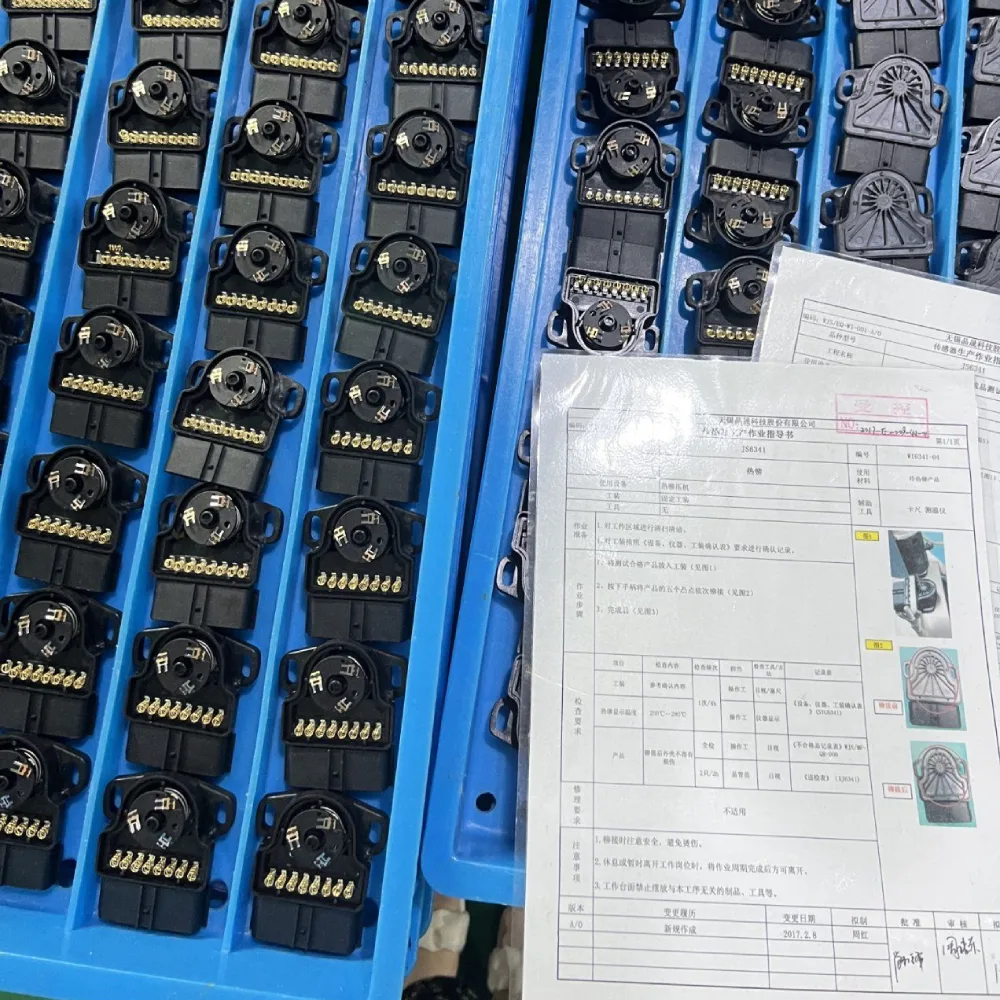
A throttle position sensor reports plate angle and how fast it changes. The rate is the part buyers underestimate, because the PCM uses it to schedule shift pressure and fuel enrichment. Four types cover nearly every reference you will quote.
| Throttle position sensor type | Wires | Typical years | Failure mode | Check before quoting |
|---|---|---|---|---|
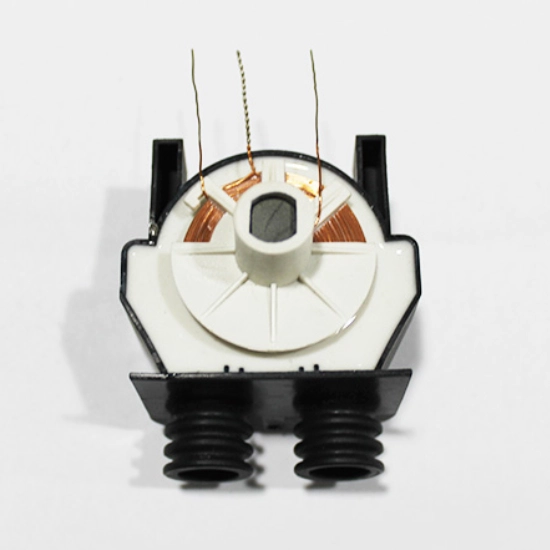
| Potentiometer (contacting) | 3 | mostly 1985–2005 | Dead spot worn into the 0–20% band | Wiper contact force, track wear layer |
| Potentiometer + idle/WOT switches | 4–5 | 1990s GM and Ford | Oxidized contacts; idle switch stops closing | Switch type must match the OE design |
| Dual-track potentiometer | 4 | late 1990s–2000s | Tracks stop mirroring, sets P2135 | Both slopes must match |
| Hall effect / non-contacting | 3–6 | 2003 onward | Magnet aging, supply voltage faults | Often part of the throttle body |
The dead spot always forms in the 0–20% band, never at wide-open throttle. The plate sits just off idle most of its life, so the wiper grinds one short arc into a groove. That is why the comeback is a low-speed stumble, not a weak top end.
Wire count is not a trim level. Three wires is 5 V reference, signal ground and one output. Four wires is either two mirrored tracks, where the PCM checks both sum to a constant, or three wires plus an idle contact. Ask which. Six wires is two independent sets.
On 4–5 wire GM and Ford units, the idle contact (nose switch) tells the PCM the plate is closed. That signal enables idle control and fuel cut. The WOT contact triggers enrichment and kickdown. A dead idle contact hangs idle high; a dead WOT contact refuses to kick down.
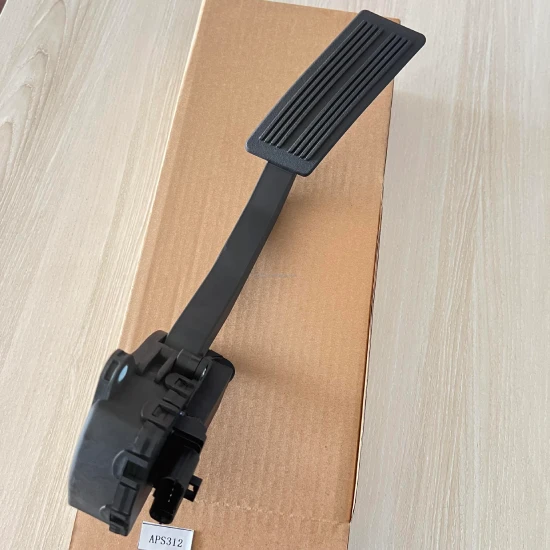
On drive-by-wire vehicles the sensor is usually built into the throttle body and cannot be replaced on its own. Confirm serviceability against the OE reference before you price the line. The pedal position sensor sits in the accelerator pedal assembly.
Throttle Position Sensor Cross Reference: Four Traps That Break Fitment
Cross reference charts are only as good as their checks.
- Same number, different connector. At a model-year break, one reference can carry a 3-pin sealed connector on one side and a 3-blade plug on the other. Demand a connector photo and a pin-out before you price it.
- Different numbers, one part. Manufacturers collapse references into one service unit: GM's 17080671, 17087653, 17106681 and 94580175 are routinely covered by one piece. Ask for the supersession chain, not a "replaces" number.
- Mounting clocking. Adjustable units rotate into place against spring tension. A different locating boss position means the sweep never reaches the specified base voltage. Remanufacturers hit this in reverse: a rebuilt throttle body ships preset and must be reset.
- Slope mismatch. The connector fits, the resistance range looks right, the output curve is not. No code sets; shift quality degrades and fuel trims drift, so the buyer returns a part they cannot diagnose. In a universal listing, slope is what bites you.
A connector that fits is not a fitment. Fitment is connector plus pin count plus mounting clocking plus output slope.
Three checks settle most of these. Lay every connector photo and pin-out side by side. Ask for the supersession chain up to the current service number. Then sweep one unit on a real vehicle and watch for a step, not a curve.
Number groups predict the design before a sample ships: Ford keeps 9B989 for TPS (E7EF-9B989-AA), Toyota 89452 (89452-12040), Nissan 22620 (22620-0S310). The same logic runs through speed sensor part numbers.
The Spec Sheet to Demand Before You Approve a Sample
Ask for seven items. Treat the last one as the deal-breaker. Figures below are typical; confirm the exact window on your RFQ.
- 100% end-of-line sweep — every unit swept 0→100%, record archived, not a shift sample
- Linearity — ±1.5% to ±3%
- Operating temperature — −40 °C to +125 °C, some installations +150 °C
- Actuation life — contacting-film 500,000–2,000,000 cycles, Hall effect higher
- Connector sealing — IP67
- Lot traceability — lot code mapped to test data
- ACES fitment and PIES attribute files — sent as files, not promised
That last item removes most quotes from consideration. US warehouse distributors and marketplace sellers cannot list a sensor without ACES fitment and PIES attributes. A factory that cannot export them dumps the catalog work on you. The rest of the line is covered in our automotive sensor sourcing guide.
No sweep record for your sample lot? You are holding a brochure.
What Actually Drives TPS Demand in the US Aftermarket
Average US light-vehicle age passed 12.8 years in 2025 (S&P Global Mobility), on roughly 289 million vehicles in operation that year. The light-duty aftermarket: about $435 billion, forecast past $500 billion by 2028 (Auto Care / MEMA 2025 Joint Channel Forecast).
A throttle position sensor's sweet spot is the cable-throttle era, roughly 1985–2005. With the fleet averaging more than 12 years old, the 2012–2013 model years are entering their high-repair window. OBD-II has been mandatory since 1996, so a failed sensor sets a code: P0120 or P2135. You can settle the return on that code.
Throttle Position Sensor Supplier: MOQ, Carton Qty, Lead Time, Private Label
A serious supplier puts all five in the first email. Ranges below are typical.
- MOQ — 50–200 pcs per part number, mixed references reach the floor
- Carton quantity — inner box 10–20 pcs, master carton 100–200 pcs
- Lead time — 15–30 days in production, 7–15 on stock references
- Ocean freight — about 30–40 days to the US West Coast
- Private label — pad print or laser marking, color box and insert sheet, per-SKU minimum rising. The insert must carry the relearn procedure: idle voltage becomes the PCM's 0% reference, and skipping the learn sets P2176, P2109 or a hanging idle.
Ask for FOB at 500, 2,000 and 5,000 pcs with carton dimensions and CBM at each tier. Coverage runs to 43 TPS references across Ford, Toyota, Nissan, Hyundai/Kia, GM and Chrysler; check your numbers against our throttle position sensor range.
Landed Cost and the Supplier Switchover Checklist
Landed cost starts with two lines on paper: FOB or DDP, and the HS classification the supplier confirms in writing. Duty treatment moves with trade policy, so get the HTS line and current rate in the quote.
A $9 unit drifts off spec inside six months. A carbon track and stamped bronze wiper grind a dead spot into the 0–20% band. No shaft seal, so oil vapor films the track. And no 100% sweep before it is boxed.
To validate a switchover, pull n=30 of one reference across three model years, slow sweeps cold and hot, base voltage against a 5 V reference (0.5–1.0 V closed, 4.5–5.0 V at WOT). Scan tools miss a transient, so sweep slowly.
Then set a defect baseline in writing: expected first-lot failure range, and whether you replace, credit or split freight.
Our units are aftermarket replacements built to the OE reference number. We are not affiliated with any vehicle manufacturer and do not represent these parts as theirs. The paper trail is in our IATF 16949 certification and factory audit report.
A supplier who quotes a lower unit price but will not quote a carton dimension has not shipped this part to the US before.
Sourcing FAQ: Cross Reference, MOQ and Warranty
Can you supply throttle position sensors under our own brand?
Yes. Pad print or laser marking, color box and insert sheet; per-SKU minimum rises.
What is the MOQ and carton quantity for a TPS?
Per part number, not per order: 50–200 pcs, 10–20 per inner box, 100–200 per master carton. Mixed references combine to reach the floor.
Do you provide cross-reference data or ACES/PIES files?
Yes. Interchange and supersession chains per reference, plus ACES fitment and PIES attribute files.
How do you handle warranty returns on sensors?
Replacement, credit or freight split against the agreed first-lot defect range. Every unit traces back by lot code.
Get the Cross-Reference Check
Send us the OE numbers you are sourcing and the annual volume per number. We will come back with a cross-reference check, the connector and pin-out for each, a carton quantity, and an FOB price at your volume tier, usually within two business days. No minimum order to get the check.